This is the second draft, or rather the second half of the piece I originally wrote. The first half detailed how I found my way to the art of book binding, but the whole thing was six pages and several thousand words long. I’ll share that first part at some point, but here I’ll stick to the nuts and bolts, or rather glue and paper, of what it takes to bind a book because I found it delightful and maybe so will you.
I’ve always been one of those poor souls for whom paper, and stationary at large hold great fascination. As I scroll past ads on Instagram for special editions of books with sprayed edges, foiled covers, and special end papers, I have to grudgingly admit that I am indeed the target audience. I own an absolutely glorious printing of Dune simply because it is beautiful. I have every intention of re-reading it at some point, but more importantly, it’s a piece of handily accessible art that I can keep on my shelves and ogle (and force others to ogle at) at my leisure.
All this to say, it’s more of a wonder that it took me so long to jump down the bookbinding rabbit hole, than the fact that I fell into it in the first place. At some point in my early adolescence, I was gifted a paper-making kit and went on a rampage of making my own books. In my childhood closet there are several copies of book reports bound and illustrated into book form with my own hands. Wasn’t I a clever one.
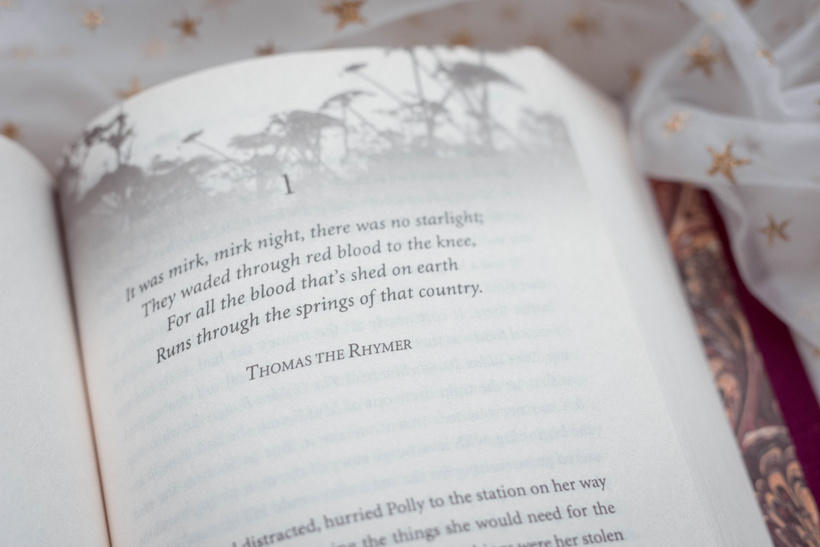
I chose re-binding Fire and Hemlock, my favorite Diana Wynne Jones book (yes, even more favorite than Howl’s Moving Castle, which should tell you something) as my first bind project. I was due for a re-read and thought it was a good opportunity to get a lovely copy for my shelves. Luckily for my new hobby, a lovely copy of this book does not exist. They are, to a one, fugly.
So, how does one bind a book? First, you need equipment (in this case a bone folder, PVA glue, a real sharp knife, and a book press (aka cigar boxes and clamps)). Then you need the good stuff—I’m talking book cloth, end papers, head bands. I got all of these at Hollanders online, plus their book on bookmaking, which I find deliciously meta.
Then, dear reader, I committed one of the greatest crimes against books that exists—worse even, than dog-earing pages—I tore that cover right off. Which is to say I cut it very carefully, until I had just the brick of pages, also known as a text block.
Most of re-binding a book is measuring, cutting, and gluing. Once I had a naked text block, I attached the end papers I had chosen (a slightly unsettling French marbling that reminded me of faces in smoke), and immediately it was much better. After that came attaching super, which is a spine reinforcement that looks like cheese cloth; polling instagram for what headbands I should use, and attaching those as well.
After that I made an oxford hollow—a cardboard tube to press the spine away from the book board to allow it to lay flat—which as it turns out I didn’t need to do for this particular project, but now I’m well prepared if I ever need to re-bind a bible.
From there I made the cover, which included a lot of diligent measuring (incorrectly) and then cutting, and subsequently re-cutting my book board once I realized it was wrong. I taped it all together, went ‘wow, this almost looks like a book’ and then I glued the covers and spine down to the book cloth and got to use the bone folder a lot which made me feel very hardcore and appropriately old-timey.
The most time-consuming part of this process, which took roughly ten hours in total— time watching glue dry notwithstanding—was the cover art. I would wager I spent a good five-six hours on designing, and then redesigning an almost finished cover, in Procreate.
I’ve only had a handful of experiences with the Cricut so far, but this one was by far the easiest. This summer my big project was designing and cutting card stock invites for mine and Nick’s ten-year wedding anniversary party, Tinfinity. Card stock is thick, finicky, and dulls blades faster than you can say ‘why did I do this to myself?’ Vinyl, on the other hand, is a crafter’s dream. It cuts like butter and allows a huge degree of intricacy.
The actual foiling, though probably the most nerve-wracking part of the process also went smoothly, and I was left with a rather glorious looking vision of gold on plum.
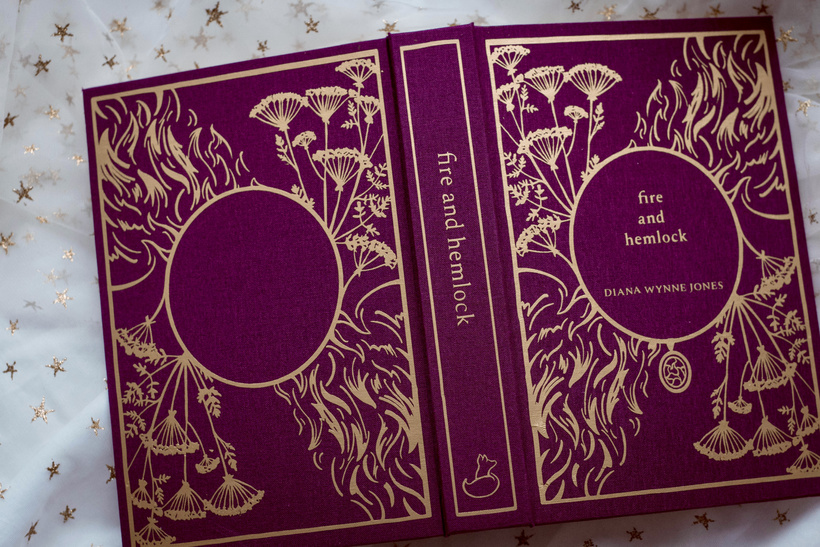
The last step was actually casing the book, which is to say, gluing the text block into the cover. This was definitely the hardest step; I struggled a lot with getting the spacing right. I suspect some of the struggle is that I think I may have made the spine a hair too wide, so I’ll have to experiment with that, but other than that the whole process was deeply enjoyable and satisfying—far more so even than I thought it would be.
There is a tangible bliss in holding with your own two hands, something that those hands have made. When most of your art is performance based, there’s an inherent distance between what you’ve created and what consumes it. Sometimes the distance is a ten-foot buffer between the stage and the first row of chairs; sometimes it’s a screen and your only sense of reaction is a tap on a heart, and if the gods are really smiling, a comment with a bunch of fire emojis.
Not so with a book, it turns out. A book uses all of our senses. You can touch it, listen to the whisper of pages, sniff it, lick it (though please refrain). I can, and did, bring it in to work one day so I could literally shove it in people’s faces and tell them to go ‘ooh.’ The people were very obliging. They ‘oohed,’ and they sniffed, and they refrained from licking, and best of all they asked me questions so I could talk more about my latest niche hobby.
And lastly, there’s an intangible bliss of creating something just for yourself, with no expectations and strings attached. We’re so focused on the hustle and side-hustle culture, on monetizing our hopes and hobbies that it’s easy to forget that the reason we create things is, at its core, because we like to create things. Plenty of people asked me what I was going to do with the book, if I was going to start an Etsy shop or sell them. People asked me ‘why?’ As if creation requires reason.
So, what am I going to do with the book? Look at it, love it, read it. Lick it, maybe, then make another.
Want to see more process? Check out the BOOKBINDING highlight on my Instagram.
No responses yet